

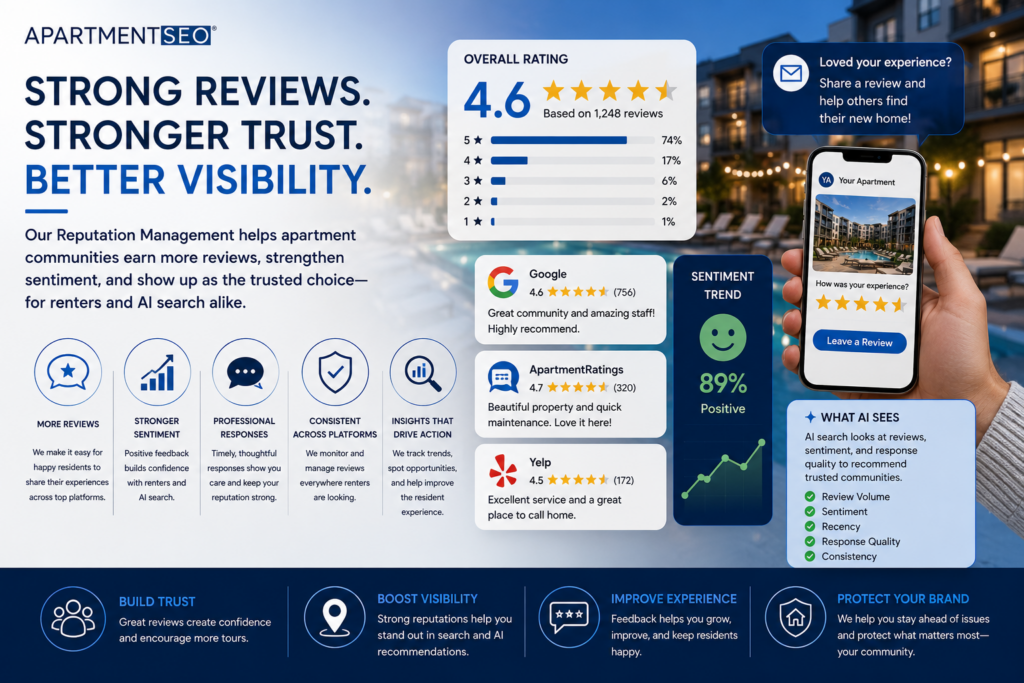
Online reviews have always influenced apartment leasing decisions.
Prospective residents read them to understand management responsiveness, maintenance experiences, apartment quality, neighborhood access, and overall resident satisfaction. A strong reputation can encourage someone to schedule a tour. A pattern of unresolved complaints can push that same renter toward another community.
Now, reviews are influencing more than human decisions.
AI-powered search platforms can use reviews and other public information to form summaries, compare properties, and answer renter questions. This means every review may contribute to the digital narrative surrounding an apartment community.
Apartment SEO’s Reputation Management solution helps multifamily properties strengthen that narrative through an organized, fully managed strategy.
Reviews Have Become Search Signals
When renters ask AI tools for apartment recommendations, the platform may evaluate information from multiple sources.
Reviews provide valuable context because they describe real experiences. They can reveal common themes around service, amenities, communication, move-in processes, and community operations.
A single review may not define a property. Repeated themes can have a greater influence.
If residents consistently praise the management team, that pattern can strengthen trust. If several reviews mention the same unresolved issue, AI platforms may identify it as a meaningful concern.
Reputation management helps communities understand these patterns before they begin shaping broader public perception.
Positive Sentiment Builds Confidence
Review volume alone does not tell the entire story.
The language residents use matters. Consistent positive sentiment can demonstrate that residents value the property and its team. It can also create stronger confidence among prospects researching the community.
Apartment communities should focus on earning authentic feedback through strong resident experiences.
Requests should feel natural and should never pressure residents to provide a specific rating. The goal is to make it easy for residents to share honest feedback after meaningful interactions.
These opportunities may follow a successful maintenance request, a smooth move-in, a helpful office interaction, or a well-received resident event.
Authentic reviews provide more value than forced praise.
Fresh Reviews Show Continued Relevance
A community may have hundreds of reviews, but recency still matters.
Prospective renters often want to know what the property is like now. Reviews from several years ago may not reflect the current team, services, amenities, or resident experience.
Fresh reviews provide updated evidence.
They show that residents are actively engaging with the community and that the property remains relevant. They can also help offset older feedback that no longer reflects current operations.
A consistent review strategy is usually stronger than a short campaign followed by months of inactivity.
Apartment SEO’s reputation approach recognizes review recency as an important part of maintaining a credible online presence.
Professional Responses Demonstrate Active Management
Responding to reviews is not simply a customer service task.
Responses are public evidence of how the community handles praise, questions, and criticism.
A response to a positive review can thank the resident and reinforce the experience they described. A response to a negative review can acknowledge the concern, remain professional, and offer an appropriate path toward resolution.
Defensive or generic responses can create additional problems.
The strongest responses are specific enough to feel genuine but careful enough to protect resident privacy. They should avoid arguments, confidential details, and promises that cannot be fulfilled.
Consistent response quality shows prospects that the management team is present and attentive.
Cross-Platform Consistency Protects Trust
Apartment reviews appear across multiple platforms.
A community may have feedback on Google, apartment listing sites, social media, and other review destinations. AI systems can evaluate information from several of these sources when forming an answer.
Inconsistency can weaken confidence.
A property description may promote one experience while reviews repeatedly describe another. Business information may also differ between platforms. Even basic inconsistencies can make it harder for renters and search systems to determine what is accurate.
Reputation management should therefore extend beyond one review site.
Communities need to monitor sentiment, property information, responses, and recurring themes across the larger online ecosystem.
Negative Feedback Can Provide Useful Intelligence
Not every negative review is a reputation failure.
Some reviews provide useful operational insight. If several residents mention the same communication issue, maintenance delay, or policy confusion, the pattern may reveal an opportunity for improvement.
Reputation management can help teams separate isolated complaints from recurring concerns.
This allows onsite and regional leaders to make more informed decisions.
Addressing the underlying issue is often the most effective reputation strategy. Better operations create better resident experiences, which can lead to stronger feedback over time.
The goal is not to erase criticism. It is to listen, respond, improve, and ensure the complete resident experience is represented online.
Reputation Is Becoming Part of AI Visibility
Apartment marketing, reputation management, and search visibility are becoming increasingly connected.
Reviews influence renters. Responses reveal management quality. Fresh feedback demonstrates relevance. Consistency across platforms reinforces credibility.
Together, these signals can shape how digital platforms understand and describe a property.
Apartment SEO’s managed reputation solution helps communities organize these elements into a clear strategy. It supports stronger resident trust while preparing properties for a search environment where AI-generated answers may influence leasing decisions.
The communities that manage their reputations proactively will be better positioned to be understood, trusted, and recommended.